
Adaptive Cooking Techniques for Individuals with Disabilities
Cooking is an essential life skill that allows individuals to maintain independence and enjoy nutritious meals. Occupational therapists play a crucial role in helping individuals with disabilities develop adaptive cooking techniques that make meal preparation safe, efficient, and enjoyable.
This blog explores practical strategies, assistive kitchen aids and modifications that can help individuals with physical or cognitive impairments cook with greater independence and confidence.
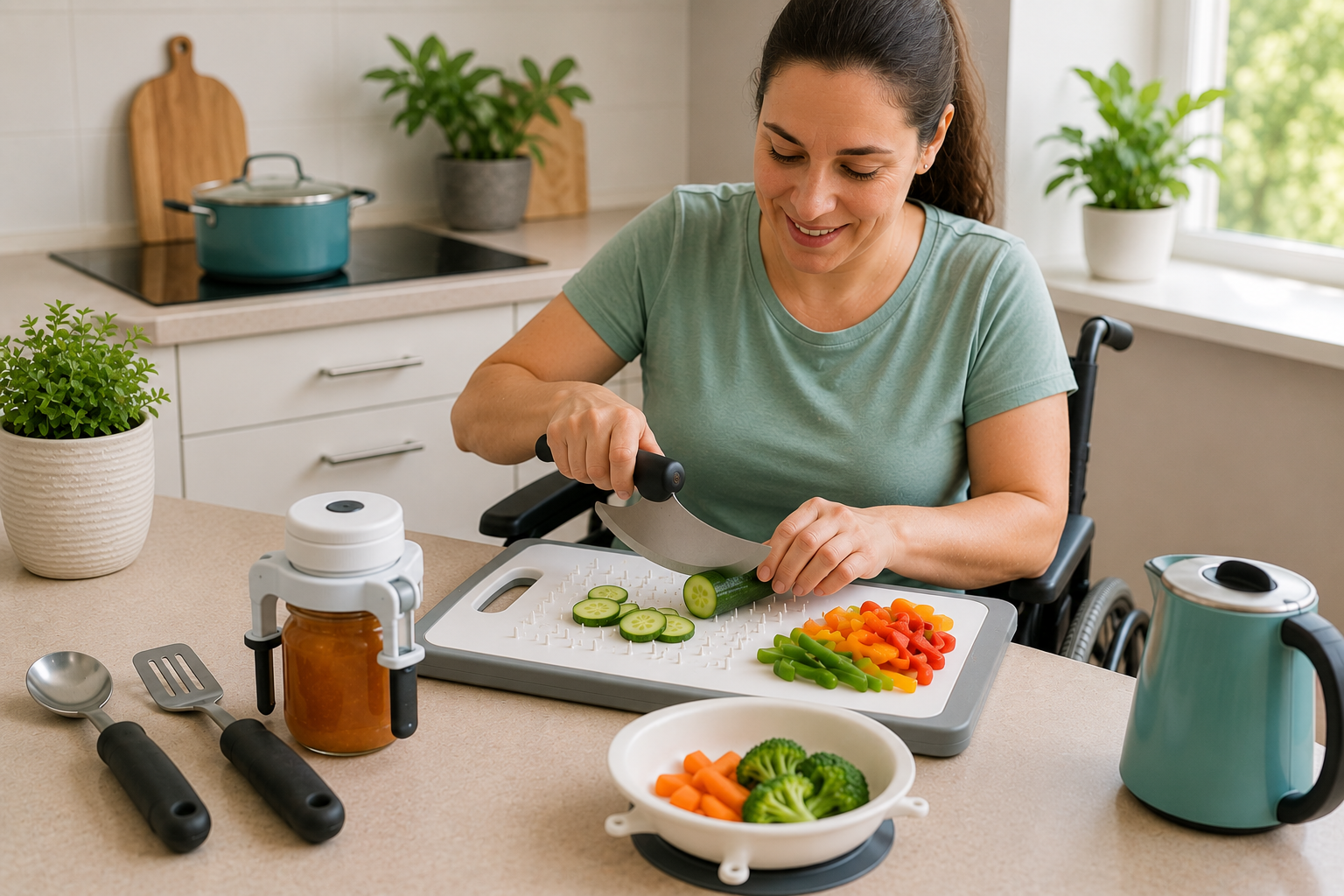
A woman using a wheelchair prepares vegetables in an accessible kitchen using adaptive cooking tools. The image highlights safe, independent and confident meal preparation.
Understanding the Challenges of Cooking with a Disability
Cooking involves a range of fine and gross motor skills, including grasping utensils, lifting pots, chopping ingredients, and moving between workstations. Individuals with disabilities may encounter challenges such as:
Limited Hand Dexterity – Conditions like arthritis, cerebral palsy, or stroke-related impairments can affect grip strength and hand coordination.
Reduced Mobility – Wheelchair users or individuals with balance issues may find it difficult to move between workstations, reach for items, or stand for prolonged periods.
Fatigue and Energy Conservation – Chronic conditions such as multiple sclerosis (MS) or fibromyalgia can cause fatigue, making cooking an exhausting task.
Visual or Cognitive Impairments – Neurological conditions, such as stroke, can result in difficulties with reading labels, distinguishing ingredients or remembering cooking sequences.
By addressing these challenges with adaptive cooking techniques and tools, individuals can re-gain confidence and independence in the kitchen.
Essential Adaptive Kitchen Tools
Occupational therapists often recommend specialised kitchen tools to help individuals with disabilities cook more safely and efficiently. Some commonly used assistive devices include:
1. Adaptive Knives and Cutting Aids
Rocker Knives – Require minimal wrist movement and allow individuals to cut with a rocking motion rather than sawing.
Knife Guards and Finger Protectors – Prevent accidental cuts and improve safety.
Chopping Boards with Built-in Holders – Secure vegetables and other food items to reduce the need for gripping.
One-Handed Cutting Boards – Feature spikes or stabilisers to keep ingredients in place for one-handed use.
2. Easy-to-Use Cooking Utensils
Built up or weighted Cutlery/Utensils – Spoons, spatulas, and ladles with wider, rubberised or weighted handles can improve grip and hand function.
Automatic Stirring Devices – Battery-operated tools that stir pots automatically, reducing the need for manual stirring.
Long-Handled or Angled Spoons – Allow for easier scooping and stirring for individuals with limited wrist movement.
Non-Slip Mats and Suction Bowls – Prevent dishes and ingredients from sliding while in use.
3. Accessible Kitchen Appliances
Electric Can and Jar Openers – Assist individuals with reduced grip strength and hand dexterity to safely and independently open cans and jars.
One-Touch Kettles – Tilt and pour kettles designed for individuals with limited hand dexterity.
Induction Cooktops – Safer than open-flame stoves, as they cool quickly and reduce burn risks.
Talking Kitchen Scales and Timers – Assist individuals with visual impairments in measuring ingredients accurately.
4. Modifications for Wheelchair Accessibility
Adjustable-Height Countertops – Ensure wheelchair users can comfortably prepare food.
Pull-Out Shelves and Lazy Susans – Improve accessibility to storage spaces.
Side-Opening Ovens – Easier to access for individuals with limited mobility compared to traditional drop-down oven doors.
Wall-Mounted or Fold-Down Tables – Provide an additional workspace at a suitable height.
Adaptive Cooking Techniques
Beyond using assistive kitchen tools, individuals with disabilities can adopt various adaptive cooking techniques to make meal preparation easier and safer.
1. Meal Preparation and Organisation
Plan Ahead – Preparing ingredients in advance can reduce strain and make the cooking process more manageable.
Pre-Chopped and Pre-Measured Ingredients – Using pre-cut vegetables and portioned ingredients saves time and effort.
Use a Traymobile or Tray – Transporting ingredients and utensils between workstations reduces unnecessary movement.
Sit While Cooking – Using a sturdy chair or perching stool conserves energy for individuals with physical limitations.
2. Safe Cooking Methods
One-Pan or Slow Cooker Meals – Require minimal stirring and handling of multiple pots.
Microwave Cooking – A safer and quicker alternative for reheating or preparing simple meals.
Use Lightweight Cookware – Pans with two handles or made from lightweight materials reduce strain on the upper limbs.
Hands-Free Operation – Foot pedal-operated bins and soap dispensers improve hygiene and ease of use.
3. Energy Conservation Techniques
Batch Cooking – Preparing meals in bulk and freezing portions reduces the need for daily cooking.
Use Kitchen Timers – Prevents overexertion by breaking tasks into shorter, manageable intervals.
Delegate Tasks When Possible – Enlist the help of family or carers for heavy lifting or difficult tasks.
Keep Frequently Used Items Accessible – Store commonly used utensils and ingredients at waist height to minimise bending or reaching.
Ensuring Kitchen Safety
Safety is a top priority when adapting the kitchen for individuals with disabilities. Some important safety considerations include:
Fire Prevention Measures – Use automatic shut-off appliances and induction cooktops to prevent burns and fires.
Clear Pathways – Keep the kitchen clutter-free to reduce trip hazards.
Non-Slip Flooring – Prevents falls, particularly in areas prone to spills.
Handle Hot Items with Care – Use oven mitts and pot stabilisers to safely handle hot cookware.
Good Lighting – Ensure workspaces are well-lit to enhance visibility, particularly for individuals with visual impairments.
The Role of Occupational Therapy in Adaptive Cooking
Occupational therapists provide valuable support in helping individuals develop skills for safe and independent cooking. Their role includes:
Assessing Individual Needs – Evaluating physical and cognitive abilities to recommend appropriate kitchen modifications.
Training on Assistive Tools – Teaching individuals how to use adaptive cooking tools effectively.
Developing Personalised Cooking Strategies – Creating tailored solutions based on the individual’s strengths and challenges.
Ensuring a Safe Kitchen Environment – Recommending changes to improve accessibility and reduce risks.
Accessing Adaptive Cooking Support in Australia
In Australia, individuals with disabilities can access support for adaptive cooking through various services, including:
National Disability Insurance Scheme (NDIS) – Provides funding for assistive kitchen tools and occupational therapy services.
My Aged Care – Supports older adults in acquiring adaptive cooking solutions to maintain independence and in accessing occupational therapy services.
Community Health Services – Many local organisations offer training programs on independent living skills, including cooking.
Occupational Therapy Clinics – Private and public clinics provide assessments and training on adaptive kitchen techniques.
Final Thoughts
Cooking with a disability presents with unique challenges. By utilising adaptive cooking techniques, assistive tools and support from occupational therapists, individuals can develop and maintain independence and safely and efficiently participate in meal preparation.
If you or a loved one is struggling with kitchen accessibility, consulting an occupational therapist can be the first step towards developing practical solutions tailored to individual needs.
Get in touch today to speak with our team:
📞 0474 248 081
✉️ enquiries@thrivehealththerapies.com