
Mobility Scooter Assessments Adelaide: What to Expect
A mobility scooter assessment helps determine whether a scooter is a safe and suitable mobility option for a person’s needs, goals and everyday environment.
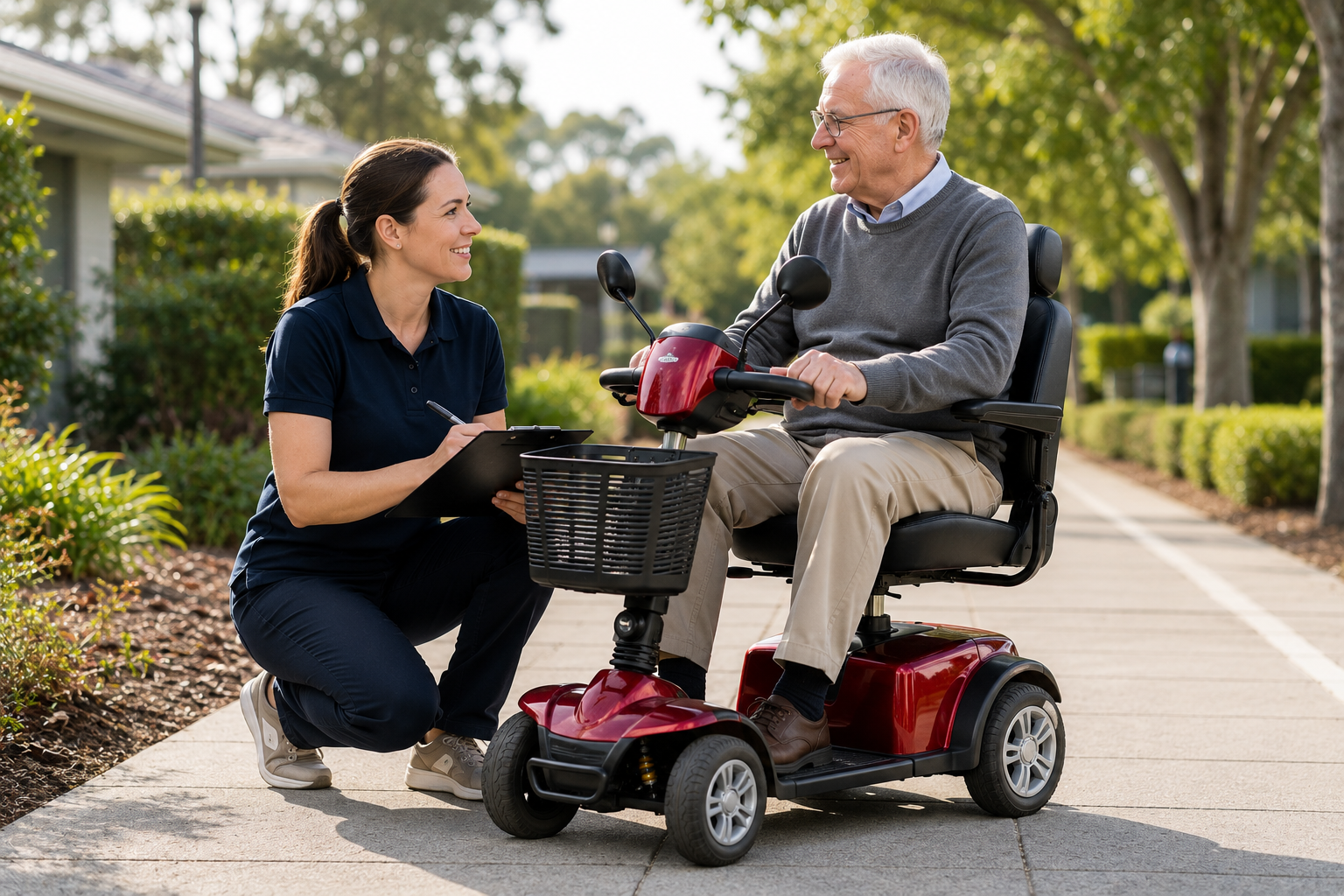
Thrive Health Therapies provides occupational therapy mobility scooter assessments across metropolitan Adelaide. Our occupational therapists assess the person’s physical and cognitive abilities, intended travel routes, transport requirements and home environment. We can then support them to trial suitable scooters and select an option that meets their functional needs.
What is a mobility scooter assessment?
A mobility scooter assessment is completed by an occupational therapist to determine whether a person can safely use a mobility scooter and identify the features they require.
The assessment considers more than the person’s ability to operate the controls. The scooter must also be appropriate for:
the person’s seating and positioning needs
their physical and cognitive abilities
the distances they intend to travel
local footpaths, crossings and terrain
access to their home and storage area
charging and battery requirements
transport in a vehicle, when required
their lifestyle and community participation goals.
Where appropriate, the occupational therapist may arrange a trial with a mobility equipment supplier before recommending a particular scooter.
How can a mobility scooter support independence?
A suitable mobility scooter may help someone who can walk short distances but finds longer community journeys difficult because of disability, reduced endurance, pain or another health condition.
Depending on the person’s circumstances, a scooter may help them:
access local shops and services
attend appointments
visit family and friends
participate in social or recreational activities
travel further without excessive pain or fatigue
reduce reliance on other people for some community trips
maintain their independence and connection with the community.
A mobility scooter will not be the right solution for everyone. An occupational therapy assessment can help determine whether a scooter, or another mobility option, is most appropriate.
Who may benefit from a mobility scooter assessment?
A mobility scooter assessment may be appropriate for someone who:
has difficulty walking longer distances
experiences pain, fatigue or shortness of breath when walking
has reduced balance or mobility
wants to access community activities more independently
is unsure which scooter size or model would suit them
requires evidence for an NDIS or aged care funding request
has experienced a change in their mobility or health
needs to replace an existing scooter
has difficulty safely using their current scooter.
Safe scooter use requires sufficient physical, visual and cognitive abilities, with appropriate equipment features, training or support where required. These factors are considered as part of the assessment.
What does a mobility scooter assessment involve?
The assessment process is tailored to the person and the requirements of the relevant funding body. It will generally include the following stages.
1. Understanding the person’s mobility needs
The occupational therapist will discuss:
current mobility and any equipment already used
relevant medical conditions and disability-related needs
pain, fatigue and walking tolerance
previous experience using a mobility scooter
daily activities and community access goals
where and how often the scooter will be used
whether assistance is available when needed.
This helps determine whether a mobility scooter is likely to meet the person’s goals.
2. Assessing physical and cognitive abilities
Safe scooter use requires a combination of physical, sensory and cognitive skills.
The occupational therapist may assess:
sitting balance and postural support
strength, coordination and upper-limb function
ability to transfer on and off the scooter
ability to use the accelerator, steering and brakes
vision and awareness of the surrounding environment
attention, judgement and reaction time
ability to recognise and respond to hazards
memory and capacity to follow safety instructions.
The assessment focuses on the skills relevant to operating a scooter safely in the environments the person intends to access.
3. Assessing the home and community environment
A scooter may be comfortable to use but still unsuitable for the person’s environment. The occupational therapist may consider:
doorway and gate widths
ramps, steps and access paths
turning and manoeuvring space
safe storage and charging arrangements
footpath surfaces and gradients
road crossings, kerbs and traffic
shopping centres and other regular destinations
weather exposure and visibility
access to public or community transport.
Where relevant, an assessment in the person’s home or community can provide valuable information about the conditions they will encounter in everyday life.
4. Trialling mobility scooters
If a scooter appears suitable, the occupational therapist can work with a mobility equipment supplier to arrange a trial.
A scooter trial may assess:
seat size and comfort
postural support
access to the controls
steering, acceleration and braking
turning circle and manoeuvrability
stability on slopes or uneven surfaces
ability to negotiate doorways, kerbs and crossings
battery range
maximum user weight
scooter dimensions and storage requirements
portability and vehicle transport.
Trialling equipment helps compare different options and provides evidence that the recommended scooter is safe, suitable and likely to meet the person’s needs.
What types of mobility scooters can be considered?
The most appropriate scooter will depend on how and where it will be used.
Portable or travel scooters
Portable scooters are generally smaller and may be dismantled or folded for vehicle transport. They can be useful for shorter trips but may provide less postural support, stability or battery range than larger models.
Medium-sized mobility scooters
Medium-sized scooters may offer a balance between manoeuvrability, comfort and outdoor performance. Transport and storage requirements still need to be considered.
Large mobility scooters
Larger scooters may provide greater stability, seating support and battery range for regular outdoor use. However, they require more space to manoeuvre, store and transport.
A larger or more expensive scooter is not automatically the most appropriate option. Selection should be based on the person’s functional needs, intended environments, transport requirements and goals.
What happens after the scooter trial?
After the assessment and trial, the occupational therapist may:
recommend the most suitable scooter and required features
document the scooters trialled and alternatives considered
explain why the recommended option best meets the person’s needs
identify risks and strategies for reducing them
obtain or review a supplier quotation
prepare written advice or an assistive technology assessment report
provide evidence for a funding request, when required
recommend training, supervision or further assessment.
A recommendation does not guarantee that a funding body will approve the scooter. Funding decisions are made by the relevant organisation according to its eligibility and funding rules.
Scooter delivery, setup and training
Once the scooter has been delivered, occupational therapy support may include:
checking the scooter’s fit and setup
adjusting the seat, armrests and controls where possible
practising starting, stopping, steering and reversing
negotiating doorways and confined spaces
managing slopes, kerbs and uneven surfaces
practising road crossings and community routes
reviewing charging and battery care
discussing visibility, weather and emergency planning
providing guidance to family members or support workers.
Training can be completed in environments relevant to the person, such as around their home, on local footpaths or at frequently visited community locations.
Follow-up may also be recommended if the person’s abilities, environment or mobility needs change.
Mobility scooter rules in South Australia
In South Australia, a mobility scooter may be referred to in legislation and government guidance as a motorised wheelchair.
A mobility scooter that cannot travel faster than 10 km/h and is used by a person who is unable to walk or has difficulty walking is generally treated as a pedestrian under the Australian Road Rules.
This means users should generally:
use the footpath or nature strip where available
follow pedestrian crossings and traffic signals
avoid bicycle lanes
travel at a speed appropriate for the conditions
avoid creating a hazard or obstruction
take additional care around driveways, crossings and other pedestrians.
Different requirements may apply according to a scooter’s speed, weight, design and use. Current information is available from the South Australian Government’s guidance on motorised wheelchairs and mobility scooters.
Can the NDIS fund a mobility scooter assessment or scooter?
The NDIS may fund assistive technology when it meets the applicable NDIS funding criteria. The scooter generally needs to relate to the participant’s disability, help meet their support needs and goals, represent value for money and be an allowable NDIS support.
The evidence required can depend on the scooter’s cost and level of risk. It may include information about:
the participant’s disability and functional needs
how the scooter will support their goals
the equipment trialled and considered
why the recommended scooter is the most suitable option
potential risks and how they will be managed
required training and support
the expected cost and supplier quotation.
An occupational therapist can provide relevant assessment evidence, but this does not guarantee NDIS funding approval. Participants should confirm their requirements with their NDIS contact, plan manager or support coordinator.
Further information is available in the NDIS guidance on assistive technology assessment evidence.
Can aged care funding assist with mobility scooters?
Eligible Support at Home participants may be approved for mobility equipment through the Assistive Technology and Home Modifications scheme.
Access depends on the person’s aged care assessment, identified clinical needs, support plan and approved funding. A prescription or supporting information from an appropriately qualified health professional may be required.
People should speak with their Support at Home provider or My Aged Care assessor about their individual eligibility and funding arrangements.
Frequently asked questions
Do I need an occupational therapy assessment before buying a mobility scooter?
Not everyone purchasing a scooter privately is required to have an occupational therapy assessment. However, an assessment can help determine whether a scooter is safe and suitable, identify the required features and reduce the risk of purchasing equipment that does not meet the person’s needs. A report or written advice may also be required by a funding body.
What does an occupational therapist assess for a mobility scooter?
An occupational therapist may assess the person’s mobility, transfers, seating, strength, coordination, vision, attention, judgement and ability to respond to hazards. They also consider the home environment, intended travel routes, storage, charging and transport requirements.
Can the assessment take place at home?
Yes. Thrive Health Therapies provides home and community-based occupational therapy across metropolitan Adelaide. Assessing the person’s usual environment can help identify access, storage and community travel requirements.
Will I be able to trial different scooters?
Where appropriate, the occupational therapist can collaborate with a mobility equipment supplier to arrange trials of potentially suitable scooters. The available models will depend on the person’s needs and supplier availability.
How long does a mobility scooter assessment take?
The total time varies according to the person’s needs, the number of scooters trialled, travel requirements and whether a written funding report is required. The occupational therapist can explain the expected process after receiving the referral.
Does an occupational therapy recommendation guarantee funding?
No. An occupational therapy recommendation provides clinical evidence, but the relevant funding body makes the final decision according to its eligibility and funding criteria.
Do you need a driver’s licence for a mobility scooter in South Australia?
Generally, a driver’s licence is not required when the mobility scooter meets the relevant South Australian requirements and is used by someone who reasonably requires it because of a physical condition. Requirements depend on factors including the scooter’s design, speed, weight and use. Users should check the current South Australian Government guidance for their circumstances.
Mobility scooter assessments across Adelaide
Thrive Health Therapies provides occupational therapy services and assistive technology assessments across metropolitan Adelaide.
Our occupational therapists can assess your mobility needs, help coordinate equipment trials and provide recommendations or funding evidence where required.
To discuss a mobility scooter assessment or make a referral, contact our team:
Phone: 0474 248 081
Email: enquiries@thrivehealththerapies.com