
Adaptive Cooking Techniques: An OT Guide to Safer Meal Preparation
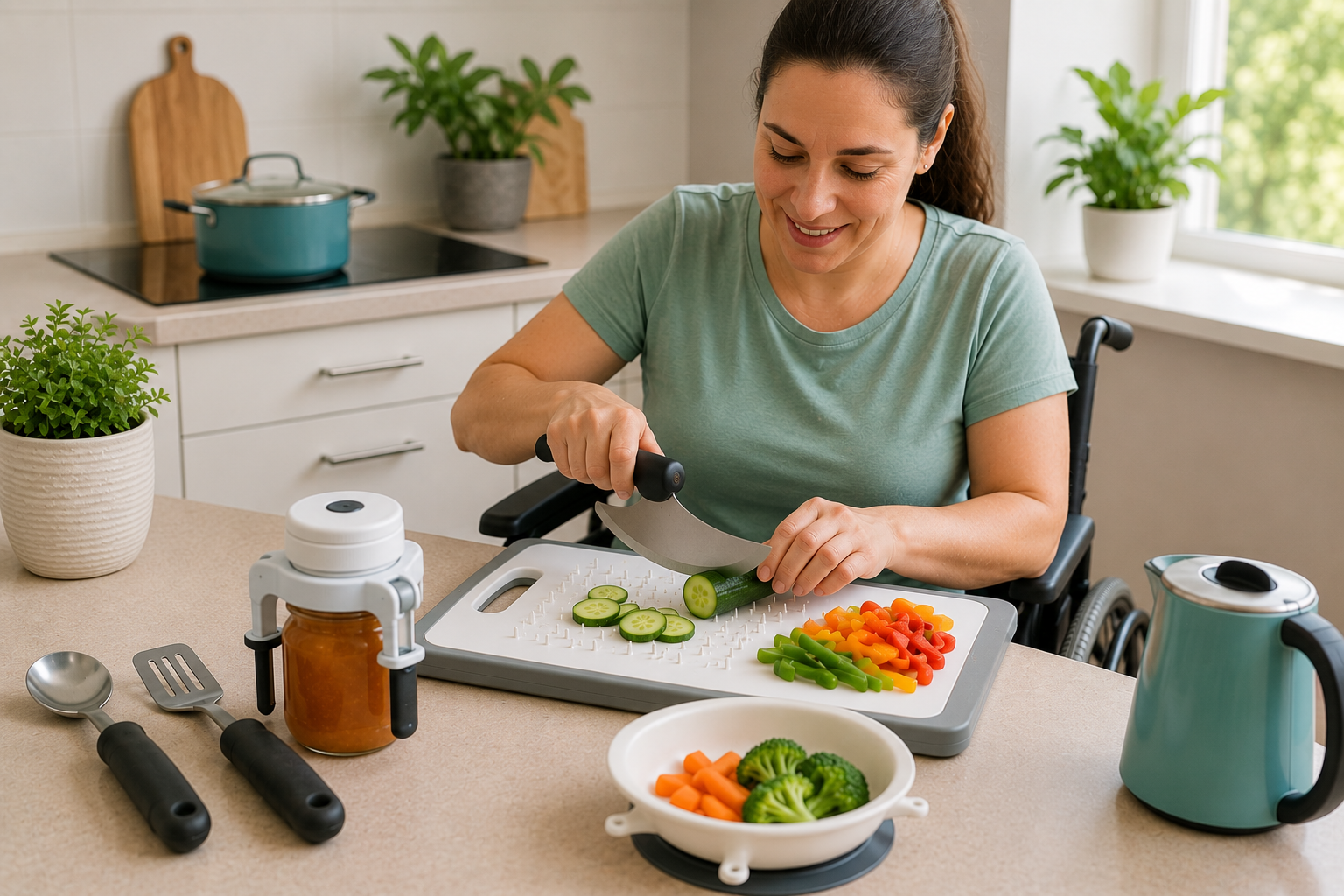
Adaptive cooking techniques can help people living with disability prepare meals more safely, independently and efficiently. Depending on the person’s needs, this might involve changing how a task is completed, reorganising the kitchen, using adaptive kitchen equipment or modifying part of the environment.
An occupational therapist can assess how a person prepares meals in their own kitchen and recommend strategies based on their movement, strength, coordination, vision, cognition, fatigue and individual goals.
What are adaptive cooking techniques?
Adaptive cooking techniques are practical ways of changing a meal preparation task to make it safer or easier.
Examples include:
preparing food while seated
using lightweight cookware with two handles
stabilising ingredients on a one-handed cutting board
breaking a recipe into clear, manageable steps
keeping frequently used items within easy reach
using timers, labels or visual prompts
preparing ingredients over several shorter sessions
changing the kitchen layout or work surface.
The right approach will be different for every person. A tool or technique that assists someone with reduced grip strength may not be suitable for a person experiencing tremor, altered sensation, reduced vision or cognitive changes.
Why can cooking become difficult?
Preparing a meal is a complex daily activity. It can require:
grip strength and fine motor coordination
balance, mobility and reaching
standing tolerance and physical endurance
vision and sensation
attention and memory
planning, sequencing and problem-solving
awareness of heat, sharp objects and other hazards.
A disability, health condition or injury can affect one or several of these areas. For example, someone may be able to plan and sequence a meal but find lifting cookware difficult. Another person may have sufficient strength but need support to remember recipe steps or monitor several appliances.
Identifying the specific barriers helps an occupational therapist recommend practical strategies suited to the person, their kitchen and the meals they want to prepare.
Adaptive kitchen equipment for reduced hand function
Reduced grip strength, hand coordination, joint movement or one-handed function can make cutting, opening containers and handling utensils difficult.
Depending on the person’s needs, adaptive kitchen equipment may reduce the strength, coordination, reach or number of hands required to complete a task.
Adaptive knives and cutting aids
Rocker knives - Use a rocking rather than sawing action and may be helpful for someone with reduced hand or wrist movement.
Knife guards and finger protectors - May reduce the risk of accidental cuts when suitable for the person and task.
One-handed cutting boards - May include spikes, clamps, raised edges or stabilisers to hold food in place and reduce the need to grip an ingredient with one hand while cutting with the other.
Easy-to-use cooking utensils
Built-up or easy-grip utensils – Wider or ergonomically shaped handles may reduce the amount of grip required. Weighted utensils can help some people but may increase effort or fatigue for others.
Automatic stirring devices – Can reduce the need to stir food manually for extended periods.
Long-handled or angled utensils – May make scooping and stirring easier for people with limited hand, wrist or shoulder movement.
Non-slip material and suction bowls – Can stabilise equipment and ingredients during food preparation.
Accessible kitchen appliances
Electric can and jar openers – May assist people who find gripping and twisting difficult.
Kettle tippers – Hold a kettle in a cradle so it can be tipped without lifting its full weight.
Induction cooktops – Can reduce some risks associated with open flames and exposed heating elements. Cookware and surrounding surfaces may still become hot.
Talking kitchen scales and timers – Can assist people with reduced vision to measure ingredients and monitor cooking times.
Accessible kitchen layouts and modifications
Environmental changes may improve access for people who prepare food while seated or use a wheelchair or other mobility aid.
Possible changes include:
Adjustable-height work surfaces – Can provide a suitable preparation height for seated and standing users.
Pull-out shelves and drawers – Can improve access to storage and reduce reaching into deep cupboards.
Side-opening or appropriately positioned ovens – May be easier to access than a traditional oven with a drop-down door.
Wall-mounted or fold-down tables – Can provide additional workspace at a suitable height.
Clear space beneath a bench – Can allow someone to approach the work surface while seated.
Accessible circulation space – Can make it easier to move through the kitchen using a wheelchair or mobility aid.
Major modifications should be planned around the person’s functional needs, existing kitchen and usual activities.
Adaptive cooking techniques
Changing how a meal is planned, prepared or cooked can sometimes be more useful than purchasing additional equipment.
Meal preparation and organisation
Plan ahead – Gathering ingredients and equipment before starting can reduce unnecessary movement and make the process more manageable.
Use pre-cut or pre-measured ingredients – These can reduce the time, strength and coordination required to prepare a meal.
Use a kitchen trolley or stable tray – This may reduce the need to carry multiple items between work areas.
Complete suitable tasks while seated – A supportive chair or appropriately prescribed perching stool may conserve energy. Seating must be stable and safely positioned away from heat and other hazards.
Break recipes into steps – Written instructions, pictures or checklists can make it easier to follow the correct sequence.
Keep the workspace organised – Reducing clutter and placing ingredients in the order they will be used can support attention and planning.
Safer cooking methods
Consider simpler cooking methods – A microwave, slow cooker or one-pan meal may reduce the number of items and steps involved. The safest option depends on the person’s abilities and awareness of hazards.
Use lightweight cookware – Lightweight pots and pans, particularly those with two handles, may reduce strain and make items easier to control.
Reduce the need to carry hot items – Preparing and serving food close to the cooking area can reduce the distance hot cookware needs to be moved.
Use hands-free equipment where helpful – Foot-operated bins, automatic soap dispensers and voice-controlled timers may make some tasks easier.
Energy conservation strategies
Prepare meals in stages – Ingredients can be prepared earlier in the day or across several shorter sessions.
Plan rest breaks – Break meal preparation into manageable stages and use a timer or other prompt when helpful.
Cook additional portions – Preparing and freezing extra portions can reduce the need to cook every day.
Prepare meals when energy levels are highest – Some people find cooking easier at a particular time of day.
Keep frequently used items accessible – Store regularly used utensils and ingredients within a comfortable reach to reduce unnecessary bending and stretching.
Seek assistance for higher-risk tasks – Family members, carers or support workers may assist with heavy lifting or tasks that cannot yet be completed safely.
Adaptive cooking strategies for memory and planning
Meal preparation can be challenging for people who experience changes in memory, attention, initiation, sequencing or problem-solving.
Helpful strategies may include:
choosing familiar recipes with fewer steps
using written or visual step-by-step instructions
laying ingredients out in the order they will be used
completing one part of the task at a time
using labelled storage containers
setting timers for cooking and rest breaks
reducing background noise and visual clutter
keeping equipment in consistent locations
practising the same meal until the sequence becomes familiar
arranging assistance or supervision for higher-risk tasks.
Technology such as voice assistants and digital timers may also be helpful. However, technology should complement—not replace—an assessment of whether the person can safely monitor heat, appliances and food preparation.
Kitchen safety considerations
Kitchen safety involves more than purchasing adaptive equipment. It is important to consider how the person moves through the room and manages heat, sharp objects, spills and multiple tasks.
Practical considerations include:
keeping pathways clear and cleaning spills promptly
avoiding loose mats that may become trip hazards
providing sufficient lighting over preparation and cooking areas
keeping frequently used items within a safe reach
turning pot handles away from the edge of the cooktop
reducing the need to carry hot liquids
using suitable heat protection and pot stabilisers
considering appliances with automatic shut-off or other appropriate safety features
ensuring smoke alarms are installed and maintained
having an appropriate emergency plan.
If a person has reduced sensation, vision, judgement or awareness of hazards, an individual safety assessment is particularly important.
The role of occupational therapy in adaptive cooking
An occupational therapist looks at the interaction between the person, the activity they want to complete and their environment.
During a meal preparation or kitchen assessment, an occupational therapist may observe:
how the person plans and sequences the task
their ability to reach, grip, lift and carry
balance and mobility within the kitchen
fatigue and standing tolerance
use of appliances and utensils
vision, sensation and awareness of hazards
the kitchen layout and storage arrangement
the level of assistance or supervision required.
Recommendations may include skill development, task-specific practice, adaptive kitchen equipment, energy-conservation strategies, environmental changes or support for family members and carers.
Where possible, assessing the person in their own kitchen provides useful information about the actual tasks, equipment and environmental barriers they experience.
Can the NDIS fund adaptive kitchen equipment?
The NDIS may fund assistive technology or disability-related supports when they meet the applicable NDIS funding criteria. An item generally needs to be related to the person’s disability, support their goals, be permitted under the NDIS rules and be supported by appropriate evidence.
Ordinary household items are not automatically funded, and a recommendation from an occupational therapist does not guarantee approval. The evidence and approval requirements can also vary according to the type, cost and risk of the equipment.
Participants should check their plan and speak with their NDIS contact, plan manager or support coordinator before purchasing an item if they are unsure.
Can aged care funding assist with kitchen equipment or modifications?
Eligible Support at Home participants may be approved for assistive technology or home modifications through the Assistive Technology and Home Modifications scheme. Access depends on the person’s aged care assessment, support plan, approved funding and assessed clinical needs.
Some equipment or modifications may require a prescription or supporting information from an appropriately qualified health professional.
Frequently asked questions
What are some examples of adaptive cooking equipment?
Examples include rocker knives, one-handed cutting boards, non-slip material, easy-grip utensils, electric jar openers, kettle tippers, lightweight cookware and talking or high-contrast timers. Equipment should be selected according to the person’s abilities, kitchen and cooking goals.
Can an occupational therapist assess cooking skills?
Yes. An occupational therapist can assess the physical, cognitive and environmental factors affecting meal preparation. They can then recommend strategies, equipment, skill development or kitchen modifications.
Can an occupational therapist assess someone in their own kitchen?
Yes. A home-based assessment allows the occupational therapist to observe the person completing relevant tasks in the environment they use every day. This can make recommendations more practical and individualised.
How can someone cook with only one hand?
Possible strategies include using a one-handed cutting board, non-slip material, pre-cut ingredients, electric openers and cookware that is easier to stabilise. The safest approach depends on the person’s strength, coordination, sensation and kitchen setup.
How can cooking be made easier for someone who experiences fatigue?
Completing suitable preparation tasks while seated, gathering ingredients first, using lightweight equipment, taking planned breaks and preparing meals in stages can reduce energy demands. Frequently used items can also be repositioned to reduce reaching and unnecessary movement.
Are kitchen aids automatically funded by the NDIS?
No. Funding depends on the item, its relationship to the participant’s disability and goals, the NDIS funding rules and the available supporting evidence. Everyday household items are not automatically funded.
Occupational therapy support in Adelaide
Thrive Health Therapies provides occupational therapy services from our Findon clinic and in homes and community settings across metropolitan Adelaide.
Our occupational therapists can help identify barriers affecting everyday activities such as cooking and meal preparation. Depending on your needs, support may include practical skill development, assistive technology assessment, kitchen safety recommendations or home modification assessment.
To discuss occupational therapy support or make a referral, contact our team:
📞 0474 248 081
✉️ enquiries@thrivehealththerapies.com