
Wheelchair Assessments Adelaide
Thrive Health Therapies provides comprehensive occupational therapy wheelchair assessments for adults across Adelaide. Our experienced occupational therapists assess your mobility, posture, environment and everyday needs to recommend a wheelchair that supports your safety, comfort, independence and participation.
We assess manual wheelchairs, powered wheelchairs, power-assist devices, specialised seating systems and wheelchair replacements. Assessments and equipment trials can take place in your home, community or another appropriate environment.

Occupational Therapy Wheelchair Assessments Across Adelaide
A wheelchair is more than a way to get from one place to another. The right wheelchair should support your posture, protect your skin, conserve energy, fit within your environment and help you participate in the activities that matter to you.
Our wheelchair assessments are individualised and may include clinical assessment, wheelchair and seating trials, supplier collaboration, equipment recommendations, funding reports, final fitting and education.
Who we support: Adults
Where we provide assessments: Homes and community locations across metropolitan Adelaide, the Adelaide Hills and surrounding service areas
Wheelchairs assessed: Manual, powered, power-assist and complex wheelchairs
Related equipment: Custom seating, pressure cushions, positioning supports and wheelchair accessories
Funding accepted: NDIS, Support at Home, DVA and private funding, subject to eligibility
What Is a Wheelchair Assessment?
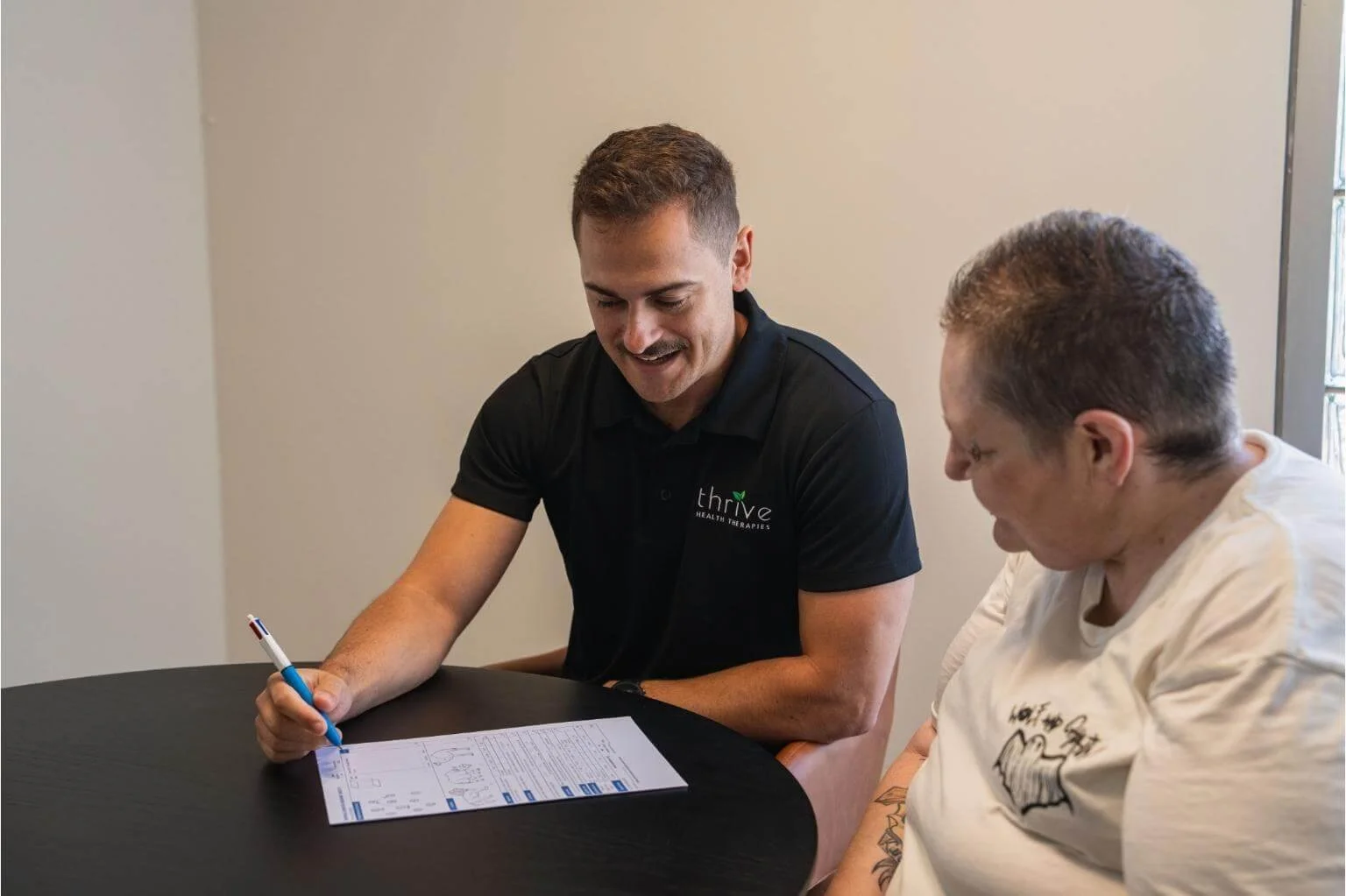
A wheelchair assessment is a comprehensive evaluation completed by an occupational therapist with relevant assistive technology and wheelchair prescription experience. It identifies the wheelchair, seating system and features most likely to meet your physical, functional and environmental needs.
The assessment considers more than the wheelchair itself. Your occupational therapist will look at how you sit, move, transfer and complete everyday activities, as well as where and how the wheelchair will be used.
The aim is to recommend equipment that:
Supports safe and comfortable mobility
Promotes an appropriate sitting position
Reduces pressure and injury risks
Accommodates your physical and postural needs
Fits within your home and other regular environments
Supports transfers and personal care
Is practical for your family, carers or support workers
Helps you participate in meaningful activities
Remains suitable for your anticipated long-term needs
We will then discuss our recommendations with you and develop a personalised plan. This may include regular physiotherapy, a home exercise program, hydrotherapy, equipment recommendations or collaboration with your family, support workers and other health professionals.
Types of Wheelchairs Our Occupational Therapists Assess
Manual Wheelchairs
A manual wheelchair may be self-propelled by the user or pushed by another person. Our occupational therapists consider the wheelchair’s dimensions, weight, configuration, propulsion demands, transport requirements and suitability for the environments in which it will be used.
Recommendations may include lightweight or customised wheelchairs, appropriate wheels and tyres, positioning components, pressure cushions and other accessories.
Powered Wheelchairs
Powered wheelchairs can support independent mobility when manually propelling a wheelchair is difficult, unsafe or likely to cause pain, fatigue or injury.
A powered wheelchair assessment may consider:
Driving ability and safety
Access method and controls
Seating and positioning
Tilt, recline and elevating functions
Pressure management
Indoor manoeuvrability
Outdoor and community access
Home accessibility
Transport and vehicle requirements
Charging and storage
The effects of fatigue, cognition, vision or upper-limb function
Training required for safe use
Power-Assist Devices
Power-assist technology can reduce the physical effort required to propel a manual wheelchair. It may be considered when someone wants to retain the benefits of a manual wheelchair but experiences pain, weakness, fatigue or difficulty managing longer distances and challenging terrain.
Your occupational therapist will assess whether power assist is safe, practical and compatible with your abilities, wheelchair and usual environments.
Complex and Customised Wheelchairs
Some people require a wheelchair with customised seating, positioning supports, powered functions or an alternative method of control.
Complex wheelchair assessments may involve several appointments and trials to ensure the recommended configuration addresses posture, pressure, mobility, comfort, safety and long-term needs.
Wheelchair Seating and Pressure Care
An appropriate seating system is essential for comfort, posture, function and skin protection.
Your occupational therapist may assess:
Sitting posture and alignment
Pelvic and trunk support
Head and upper-limb positioning
Pressure injury risk
Skin integrity
Pain and comfort
Muscle tone and movement
Fatigue
Ability to complete activities from the wheelchair
Transfers and personal care
Changes in posture or function over time
Recommendations may include pressure cushions, back supports, lateral supports, headrests, harnesses, pelvic positioning supports or other customised components.
Wheelchair Replacement and Review
A wheelchair may need to be reviewed when it no longer fits, no longer meets your needs, has become unsafe or is no longer cost-effective to repair.
Our occupational therapists can assess your current wheelchair, identify what has changed and determine whether adjustments, modifications or replacement should be considered.
Who May Benefit From a Wheelchair Assessment?
A wheelchair assessment may be appropriate if you:
Have difficulty walking safely or independently
Experience pain, weakness or fatigue when walking
Are at increased risk of falling
Need assistance to access your home or community
Cannot propel your current manual wheelchair effectively
Have changing mobility or postural needs
Require additional seating or pressure support
Have outgrown your current wheelchair
Have a wheelchair that no longer fits or functions safely
Need powered mobility or power assistance
Require a wheelchair for particular environments or activities
Need evidence to support an assistive technology funding request
Our occupational therapists work with people living with a range of disabilities and health conditions, including neurological conditions, spinal cord injuries, acquired brain injuries, cerebral palsy, multiple sclerosis, motor neurone disease, Parkinson’s disease, muscular dystrophy, limb difference, developmental disabilities and other conditions affecting mobility and posture.
You do not need to know which wheelchair you require before contacting us. Determining the most appropriate wheelchair and features is part of the occupational therapy assessment process.
What Does an Occupational Therapy Wheelchair Assessment Involve?
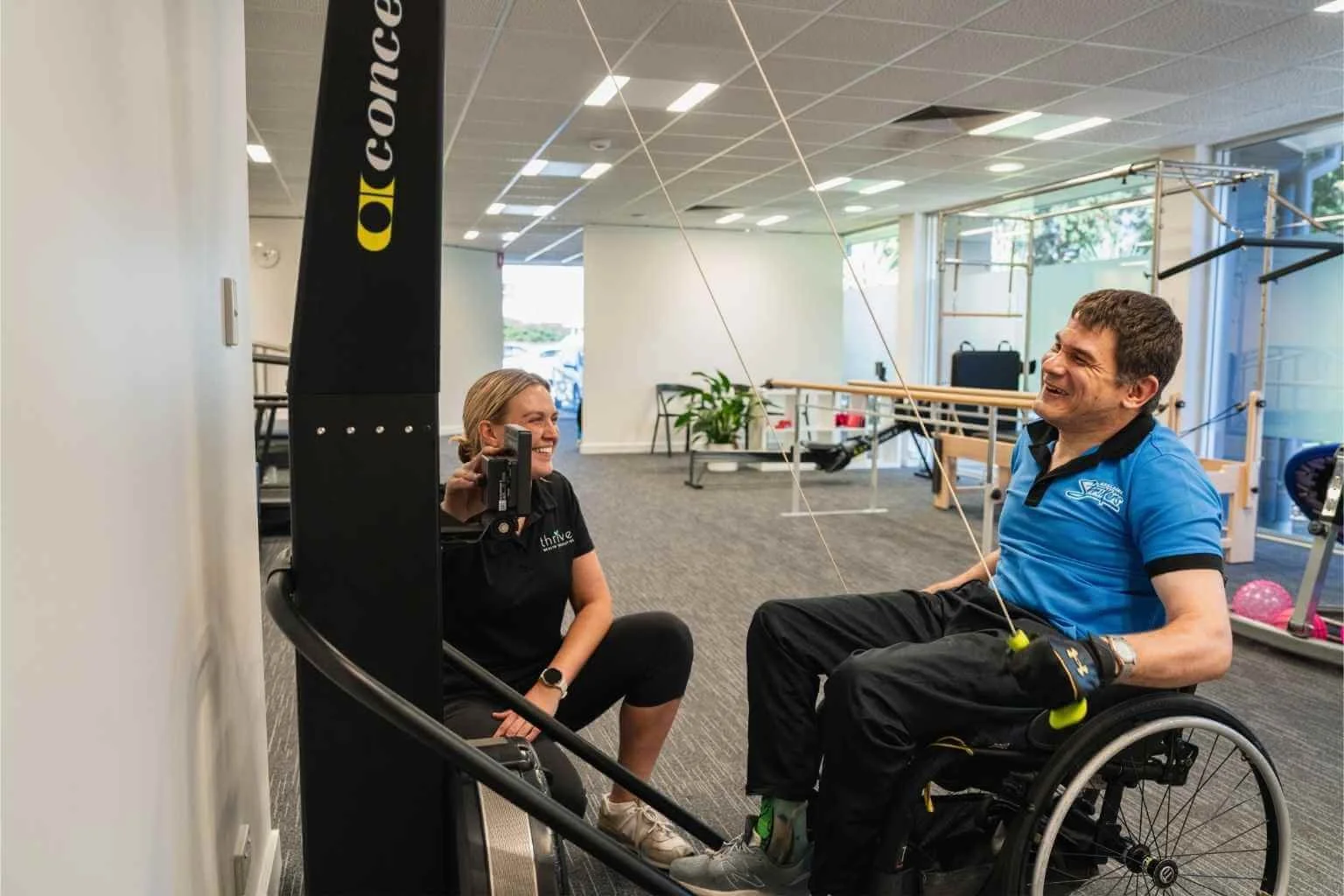
The wheelchair assessment process varies according to your needs and the complexity of the equipment being considered.
Step 1: Initial Occupational Therapy Assessment
Your occupational therapist will discuss your current mobility, daily activities, environments, equipment, challenges and goals.
The assessment may consider:
Physical abilities and functional mobility
Sitting posture and postural support
Strength and range of movement
Muscle tone and involuntary movement
Balance and coordination
Pain, fatigue and physical endurance
Skin integrity and pressure risk
Transfers and manual handling
Cognition, vision and perception
Communication needs
Current wheelchair and equipment
Home and community access
Transport, storage and charging
Support provided by family, carers or support workers
Current and anticipated future needs
Where possible, assessments are completed in the environments where the wheelchair will be used.
Step 2: Identifying Suitable Wheelchair Options
Following the initial assessment, your occupational therapist will identify wheelchair and seating options that may meet your needs.
They may collaborate with equipment suppliers to explore suitable models, configurations and accessories. Safety, function, comfort, durability, value for money and long-term suitability will be considered.
Step 3: Wheelchair and Seating Trials
Wheelchair trials allow you and your occupational therapist to compare equipment before a final recommendation is made.
Trials may assess:
Comfort and postural support
Manual propulsion or powered driving
Manoeuvrability
Transfers
Pressure management
Access within your home
Community mobility
Ability to complete everyday activities
Compatibility with transport
Use by family members, carers or support workers
Safety and ease of operation
More than one wheelchair or configuration may need to be trialled, particularly when complex equipment is being considered.
Step 4: Equipment Selection and Prescription
After completing the relevant trials, your occupational therapist will work with you and the equipment supplier to determine the most appropriate wheelchair, seating system and accessories.
The proposed equipment will be configured around your measurements, functional needs, environment and goals. Your occupational therapist may review product specifications and supplier quotations before confirming the recommendation.
Step 5: Wheelchair Assessment Report
Where written evidence is required, your occupational therapist can prepare a clinical report explaining:
Your disability-related and functional needs
Your mobility and seating requirements
Equipment considered and trialled
Trial outcomes
The recommended wheelchair and features
Why the recommended equipment is suitable
Anticipated benefits and outcomes
Relevant risks and how they will be managed
Training or support required
How the wheelchair relates to your goals
Why the recommendation represents appropriate value
The report and supplier quotation can then be provided to the relevant funding body or person managing the funding request.
Step 6: Delivery, Setup and Training
Once the wheelchair has been approved, ordered and delivered, your occupational therapist may attend the final fitting and setup.
This appointment may include:
Checking the wheelchair’s measurements and configuration
Reviewing seating and positioning
Making or requesting adjustments
Checking comfort and pressure management
Practising transfers
Wheelchair driving or propulsion training
Education for family members, carers or support workers
Discussing charging, maintenance and safe use
Follow-up appointments may be recommended to ensure the wheelchair continues to meet your needs.
Why Are Wheelchair Trials Important?
A wheelchair can affect your mobility, posture, skin, transfers, personal care, transport and ability to participate in daily life. A trial provides an opportunity to test these factors before committing to a particular model.
Wheelchair trials help establish:
Whether the wheelchair is comfortable
Whether it provides appropriate postural support
Whether you can propel or operate it safely
Whether it fits within your home
Whether it can access the environments you regularly visit
Whether its powered functions meet your needs
Whether carers or support workers can assist safely
Whether it can be transported and stored
Whether the recommended configuration is suitable over the longer term
A successful trial does not only demonstrate that someone can operate the wheelchair. It should show that the complete wheelchair and seating system can safely and practically support their everyday life.
Home-Based Wheelchair Assessments in Adelaide
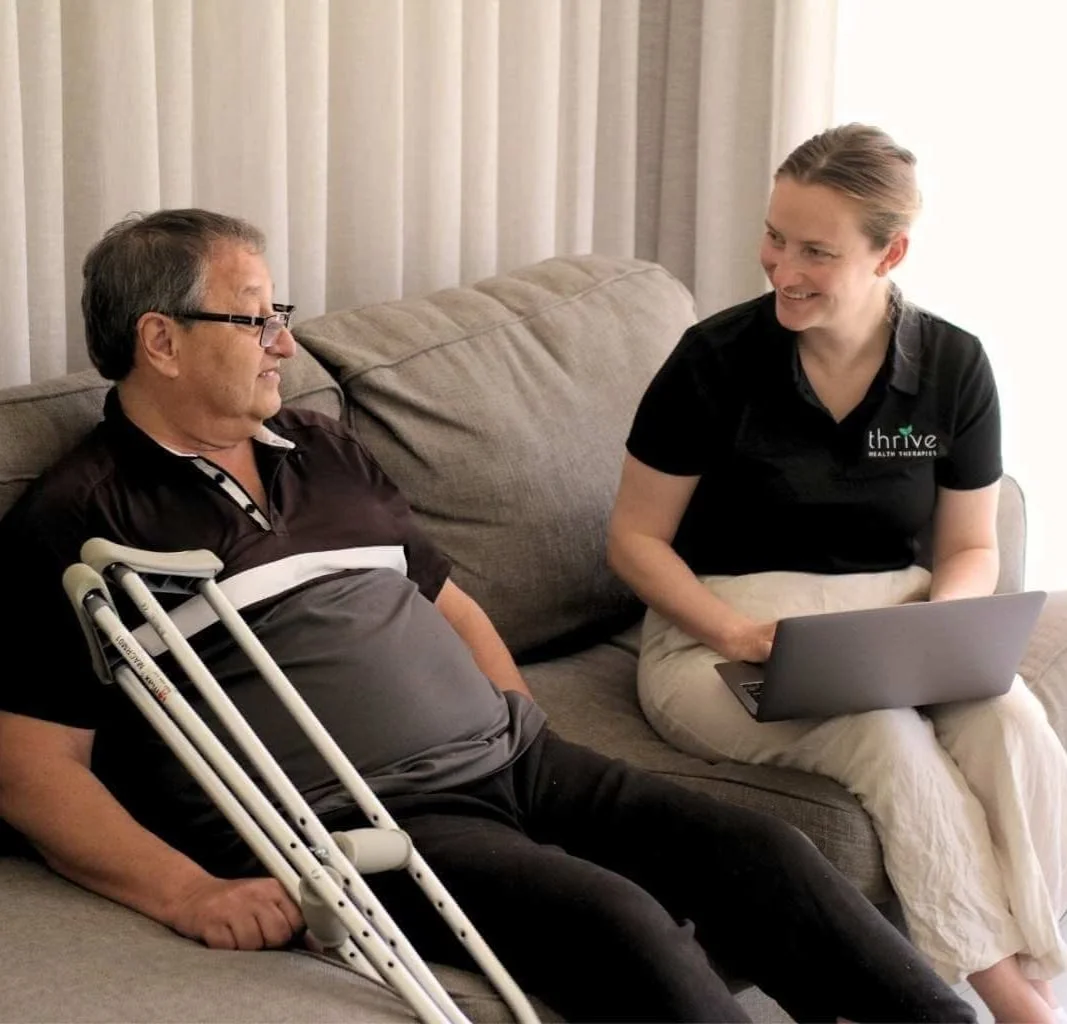
Where appropriate, our occupational therapists conduct wheelchair assessments and trials in your home or community.
Assessing a wheelchair in its intended environment allows your occupational therapist to consider:
Doorway and corridor widths
Turning space
Ramps, thresholds and floor surfaces
Bedroom and bathroom access
Transfers to beds, chairs and toilets
Access to kitchens and other living areas
Storage and charging
Driveways and outdoor surfaces
Community access
Vehicle and transport arrangements
This can help identify practical issues that may not be apparent during a clinic-only assessment.
We provide mobile occupational therapy wheelchair assessments across metropolitan Adelaide, including the western, northern, eastern and southern suburbs. Services may also be available in the Adelaide Hills and surrounding areas depending on occupational therapist availability.
NDIS Wheelchair Assessments Adelaide
Thrive Health Therapies provides occupational therapy wheelchair assessments, equipment trials and supporting reports for NDIS participants across Adelaide.
Depending on the wheelchair’s cost and risk, the NDIS may require written advice or an assessment from an appropriately qualified assistive technology assessor. Higher-cost and complex wheelchairs generally require more detailed assessment evidence.
Current NDIS guidance indicates that supporting evidence may need to explain:
The wheelchair being recommended
How it relates to the participant’s disability support needs
How it will help the participant work towards their goals
Equipment trialled and considered
Why the recommended option is the most appropriate
Long-term suitability
Risks and how they will be managed
Training required
How the wheelchair will interact with other supports
The anticipated cost and supplier quotation
Funding decisions are made by the NDIA. An occupational therapy assessment and report provide evidence for the request but cannot guarantee that funding will be approved.
Thrive Health Therapies can support participants whose plans are:
Self-managed
Plan-managed
NDIA-managed
Learn more about our NDIS occupational therapy services
Wheelchair Assessments for Other Funding Types
Depending on your eligibility and the purpose of the assessment, occupational therapy wheelchair assessments may also be accessed through:
Support at Home
Department of Veterans’ Affairs
Private funding
Other approved funding arrangements
Funding rules and approval processes vary. Our team can review your referral and confirm whether we can work with your funding arrangement before the assessment begins.
Who Conducts Wheelchair Assessments at Thrive?
Wheelchair assessments at Thrive Health Therapies are completed by occupational therapists with relevant assistive technology, mobility, seating and wheelchair prescription experience.
The occupational therapist allocated to your referral will depend on your age, diagnosis, physical needs, wheelchair type and the complexity of the seating or mobility assessment.
Our occupational therapists work collaboratively with clients, families, carers, support workers, support coordinators, treating professionals and equipment suppliers. This helps ensure that recommendations reflect both clinical needs and how the wheelchair will be used in everyday life.
Why Choose Thrive Health Therapies for a Wheelchair Assessment?
Experienced occupational therapists: Our occupational therapists have experience assessing mobility, posture, seating and complex assistive technology needs.
Home and community assessments: We can assess how a wheelchair will work in the environments where it will actually be used.
Collaborative wheelchair trials: We work with clients and equipment suppliers to compare suitable wheelchair and seating options.
Individualised recommendations: Recommendations are based on your abilities, environment, preferences and meaningful goals.
Standard and complex wheelchairs: We assess manual, powered, power-assist and customised wheelchairs.
NDIS experience: Our occupational therapists understand the clinical evidence commonly required for NDIS assistive technology requests.
Delivery and implementation support: Where required, we can assist with final fitting, setup, education and review.
Metropolitan coverage: We provide mobile occupational therapy wheelchair assessments throughout metropolitan Adelaide and may service surrounding areas depending on clinician availability.

Frequently Asked Questions About Wheelchair Assessments
If you can’t find the answer you’re looking for, contact our friendly team on 0474 248 081 or email enquiries@thrivehealththerapies.com
-
At Thrive Health Therapies, wheelchair assessments are completed by occupational therapists with relevant wheelchair, seating and assistive technology experience.
The occupational therapist assigned to your referral will depend on your age, needs and the type and complexity of wheelchair being considered.
-
Your occupational therapist may assess your mobility, posture, sitting balance, strength, movement, pain, fatigue, skin integrity, pressure risk, transfers and ability to operate a wheelchair.
They will also consider your home, transport, daily activities, support arrangements and the environments where the wheelchair will be used.
-
Yes. Our occupational therapists assess manual wheelchairs, powered wheelchairs, power-assist devices, customised wheelchairs and associated seating and positioning supports.
-
Yes. Our occupational therapists can assess complex wheelchair, seating and positioning needs. This may involve several appointments, equipment trials, supplier collaboration and a detailed clinical report.
Please provide as much information as possible when referring so we can match you with an occupational therapist who has the appropriate experience.
-
Where appropriate, we provide wheelchair assessments and equipment trials in homes and community environments throughout Adelaide.
A home-based assessment allows your occupational therapist to determine whether the wheelchair can safely access doorways, corridors, living areas, outdoor surfaces and other important parts of your environment.
-
Your occupational therapist will usually work with an appropriate equipment supplier to arrange the trial.
The supplier provides the trial equipment, while your occupational therapist assesses whether the wheelchair meets your clinical, functional and environmental needs.
-
Your preferences are an important part of the assessment. Your occupational therapist will discuss what matters to you and consider suitable options alongside your physical, functional, safety, environmental and funding requirements.
A particular model may not always be appropriate, but your occupational therapist should explain the available options and the clinical reasons for their recommendation.
-
The time required depends on the type and complexity of the wheelchair.
A straightforward assessment may require an initial appointment and equipment trial. A complex powered wheelchair or customised seating system may require several assessments, trials, equipment adjustments, reporting and a final fitting.
-
You can contact us directly or submit a referral yourself. A family member, support coordinator, treating professional or another person involved in your support can also refer with your knowledge and consent.
Some funding arrangements may require additional documentation or approval.
-
The NDIS may fund an assistive technology assessment when it relates to a participant’s disability support needs and plan.
The evidence required depends on the wheelchair’s cost and risk. High-cost or complex wheelchairs generally require assessment by an appropriately qualified assistive technology assessor.
-
No. The NDIA makes the final funding decision.
Your occupational therapist’s role is to assess your needs, conduct appropriate trials and provide clear clinical evidence explaining why the recommended wheelchair is suitable.
-
Yes. Where required, our occupational therapists can prepare supporting evidence for manual, powered and complex wheelchair funding requests.
The report may include assessment findings, trial outcomes, clinical justification, risks, anticipated benefits and details of the recommended wheelchair and features.
-
Yes. Our occupational therapists can assess whether your current wheelchair continues to meet your mobility, posture, comfort, pressure care and environmental needs.
They can identify whether adjustments, modifications, seating changes or replacement should be considered.
-
Yes. A new assessment may be required when your current wheelchair no longer meets your needs, has become unsafe, no longer fits or cannot be economically repaired.
The assessment will consider what has changed and whether the same or a different type of wheelchair is now appropriate.
-
Where required, our occupational therapists can provide education about safe wheelchair use, positioning, powered functions, transfers and pressure management.
Training may also be provided to family members, carers or support workers with your consent.
-
The cost depends on the complexity of the wheelchair, the number of appointments and trials required, travel, supplier liaison, reporting and final fitting.
Contact our team with information about the wheelchair assessment you require. We can explain the likely process and provide an estimate.
-
We are currently accepting new wheelchair assessment referrals. Availability depends on your location, age, wheelchair requirements and the type of occupational therapy expertise required.
Our team will review your referral and advise whether we have an appropriately experienced occupational therapist available.
-
Complete our online referral form or contact our team on 0474 248 081 or enquiries@thrivehealththerapies.com.
Please include information about the person’s current mobility, existing equipment, wheelchair type being considered, funding and location. This helps us allocate the referral to an appropriately experienced occupational therapist.
Ready to get started?
It’s easy!
Referral Form
Fill out our easy online referral form and we’ll be in touch!