
Every child has a unique way of communicating, and helping them develop their speech sounds is a collaborative journey between families and professionals.
Helping your child practise their speech sounds at home doesn't have to involve worksheets or lengthy practice sessions. Simple activities such as playing games, reading books and talking during everyday routines can provide valuable opportunities to develop clearer speech.
Some of the best ways to support your child's speech sounds at home include practising during daily routines, playing speech sound games, modelling sounds clearly and following activities recommended by your child's speech pathologist. Short, regular practice sessions can help children build confidence and use their developing speech skills in everyday conversations.
At Thrive Health Therapies, our team provides paediatric speech pathology services in Adelaide, taking a family-centred approach to make speech therapy practical, enjoyable and achievable at home.
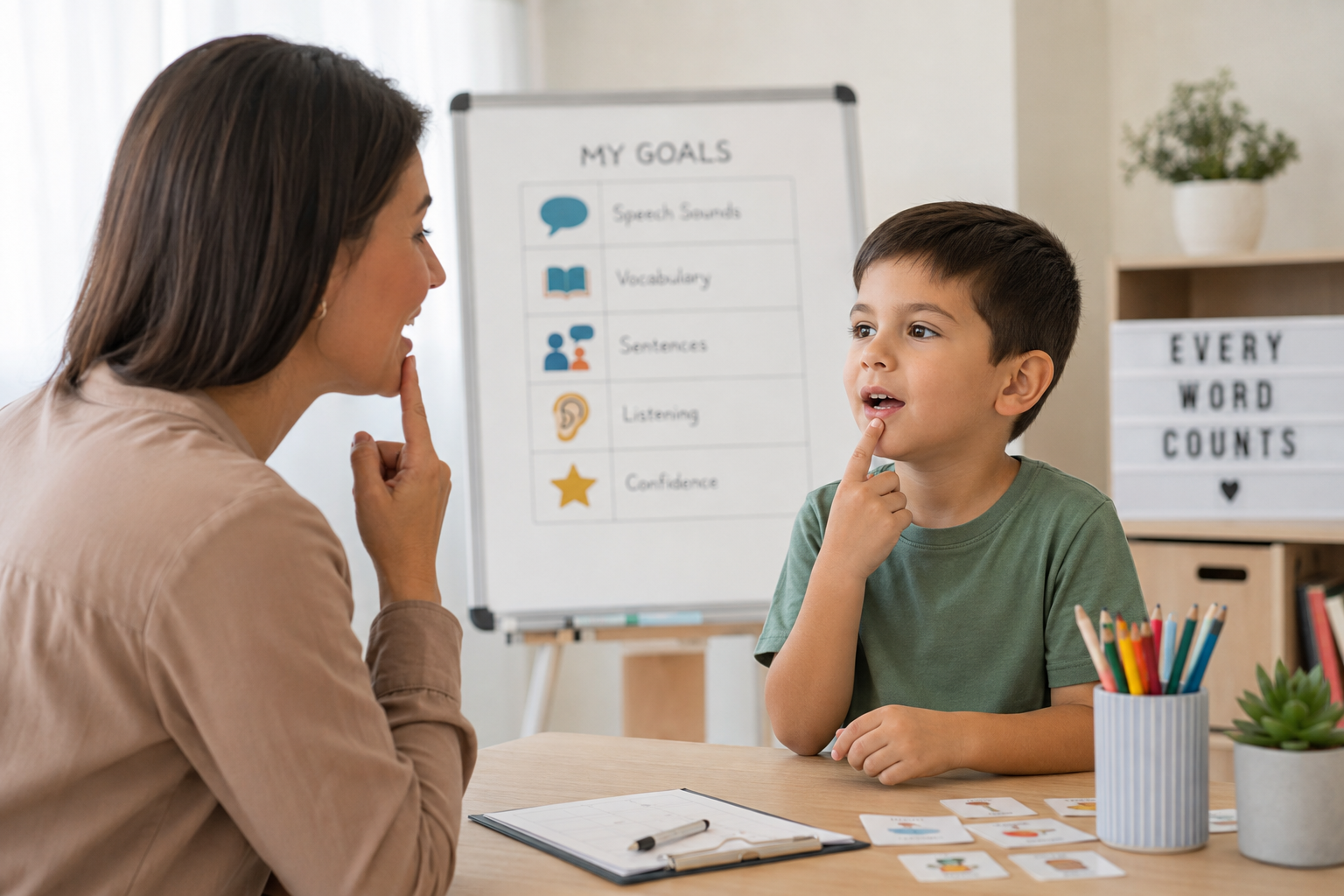
Why is speech sound practice at home important?
Children learning new speech sounds often need repeated opportunities to practise before they can use those sounds confidently in everyday conversation.
Speech pathology appointments provide opportunities to learn new skills, while home practice helps children strengthen and apply those skills between sessions.
Regular home practice can help children:
Improve the accuracy and consistency of their speech sounds.
Build confidence when communicating with others.
Practise using new sounds in different words and situations.
Transfer skills learned during speech therapy into everyday conversations.
How often should children practise speech sounds at home?
Short, frequent practice sessions are often more manageable than occasional lengthy sessions. Depending on your child's needs and therapy goals, their speech pathologist might recommend practising for around 5–10 minutes at a time.
The ideal amount of practice will vary depending on your child's age, attention, motivation and the speech sounds they're working on. Your speech pathologist can recommend an appropriate frequency and duration.
The most important thing is to keep practice positive, achievable and consistent.
7 ways to help your child practise speech sounds at home
1. Incorporate speech practice into everyday routines
Speech sound practice doesn't always need to happen at a table or involve structured activities. Everyday routines provide natural opportunities to practise sounds your child is learning.
Here are some simple ideas:
During mealtime
Use words containing your child's target sounds when talking about food, cooking or eating.
For example, if your child is working on /s/ blends, you might practise words such as spoon, sticky, sweet, small and slice. Encourage your child to join in where appropriate, without placing pressure on them to repeat every word.
While getting ready for bed
Use the bathroom mirror to practise speech sounds while brushing teeth or getting ready for bed.
Mirrors can provide helpful visual feedback, allowing children to watch how their lips and mouth move when producing different sounds.
During car rides
Play a game of I Spy, taking turns identifying objects containing your child's target sound. You could also practise familiar words, make up silly sentences or listen for sounds in songs.
Familiar routines provide a comfortable and predictable environment for learning. Incorporating speech practice into activities your child already enjoys can reduce pressure, encourage participation and make learning feel more natural.
2. Make speech sound practice fun with games
Children are often more motivated to practise when activities are playful and engaging.
You don't need to buy special speech therapy resources. Many games you already have at home can be adapted to include speech sound practice.
Here are some ideas:
I Spy: Choose objects or pictures containing your child's target sound.
Treasure hunts: Hide objects or picture cards containing target sounds around the house or garden.
Memory or Snap: Use picture cards featuring your child's target words and practise saying each word during the game.
Turn-taking games: Add speech practice to familiar games such as Pop-Up Pirate, Jenga or Connect 4. Your child might practise a target word before taking their turn.
Silly sentences: Make up funny sentences using words containing your child's target sound.
For example, if your child is practising the /k/ sound, you could make up a silly sentence such as, "The cat ate a cake in the car!"
The goal is to create enjoyable opportunities for repetition without making your child feel pressured to speak perfectly.
3. Model speech sounds clearly
Modelling involves demonstrating how to produce a speech sound or word so your child can hear and observe an accurate example.
This can be incorporated into everyday conversations, reading and play.
During story time
Emphasise words containing your child's target sound while reading together.
Slow it down
Use clear, slightly slower speech to give your child time to listen and notice how a sound is produced.
Show them how
Where appropriate, demonstrate how your lips, tongue or mouth move when making a sound, using the instructions provided by your speech pathologist.
Repeat naturally
Provide opportunities for your child to hear their target sounds throughout the day. Repetition helps build familiarity and supports learning.
Remember, modelling doesn't always require your child to repeat after you. Hearing accurate speech sounds in a positive, pressure-free environment can also support learning.
4. Use gentle corrections through recasting
Recasting is a simple way to provide an accurate speech model without directly telling your child they've made a mistake.
It involves repeating what your child has said while modelling the correct pronunciation.
For example:
Your child says: "I saw a dod!"
You respond: "Yes, you saw a dog!"
This approach allows your child to hear the correct word while keeping the conversation flowing naturally.
Recasting focuses on connection rather than correction, helping your child feel heard and understood.
You don't need to correct every speech sound error. Sometimes simply responding to what your child is communicating is the most helpful thing you can do.
During structured practice, your speech pathologist may recommend more specific feedback to help your child learn a new sound.
5. Celebrate effort and progress
Learning new speech sounds can be challenging, particularly when children have been using a different sound pattern for some time.
Positive encouragement can help children feel confident and motivated to keep practising.
Try acknowledging:
Their willingness to participate.
Their effort when attempting a challenging sound.
Improvements in their speech sound accuracy.
Their ability to recognise or correct a sound.
Their confidence using new sounds in conversation.
For example, you might say, "Great trying! I can see you're really concentrating on that sound."
Remember that progress isn't always linear. Some sounds take longer to develop than others, and every child learns at their own pace.
The goal is to support confident communication, not to make every conversation a speech therapy exercise.
6. Follow your child's individual speech therapy plan
While general speech sound activities can be helpful, the most effective practice is usually based on your child's individual therapy goals.
Your child's speech pathologist will select target sounds and activities based on factors such as their age, current speech skills, developmental stage, stimulability (their ability to produce a sound with support) and individual learning needs.
Speech sound practice often progresses through several stages:
Sound level
Learning to produce a sound on its own, such as a long "ssss" sound.
Word level
Practising the sound in individual words, including at the beginning, middle or end of words.
For example, for the /s/ sound: sun, pencil and bus.
Phrase and sentence level
Using the target sound in increasingly longer phrases and sentences.
Conversation level
Practising the sound during everyday conversations, helping your child use their developing skills more naturally.
Not every child will follow exactly the same progression. Some children may need additional support or different therapy approaches depending on the nature of their speech difficulties.
It's important to practise the sounds and activities recommended by your child's speech pathologist, rather than introducing new sounds or more difficult activities before your child is ready.
7. Stay connected with your child's speech pathologist
Speech sound development is a team effort between children, families and speech pathologists.
Regular communication with your child's therapist helps ensure home practice remains achievable, enjoyable and appropriate for their current skills.
Let your speech pathologist know if:
Your child is finding a particular sound difficult.
They're becoming frustrated or reluctant to practise.
You're unsure how to demonstrate a sound.
Practice activities are becoming too easy or too challenging.
You're noticing improvements or changes in their everyday speech.
Your speech pathologist can adjust activities, demonstrate strategies and help you find approaches that work for your family.
By working together, you can celebrate achievements, problem-solve challenges and help your child build confidence in their communication.
Frequently asked questions about speech sound practice
How can I help my child pronounce words more clearly?
You can support your child's speech by modelling words clearly, reading together, playing speech sound games and providing opportunities to practise sounds during everyday routines.
If your child is having ongoing difficulty producing particular sounds or being understood, a speech pathologist can assess their speech and recommend individualised strategies.
How long should my child practise speech sounds each day?
Many children benefit from short, regular practice sessions, such as 5–10 minutes at a time. However, the amount of practice should be guided by your child's speech pathologist and adjusted to their age, attention and individual needs.
Should I correct my child's speech mistakes?
You don't need to correct every mistake. Gently repeating a word with the correct pronunciation can provide a helpful model without interrupting communication.
During structured speech practice, your speech pathologist may recommend specific ways to provide feedback.
What if my child refuses to practise their speech sounds?
Try incorporating practice into games or activities your child already enjoys, offering choices and keeping sessions short.
If your child is becoming frustrated, avoid forcing practice. Speak with their speech pathologist about adapting activities to suit their interests and needs.
When should I see a speech pathologist about my child's speech sounds?
Consider seeking advice if your child is difficult for others to understand, regularly substitutes or omits sounds, becomes frustrated when communicating, or isn't developing speech sounds as expected for their age.
A speech pathologist can assess whether your child's speech development is progressing as expected and whether additional support would be helpful.
Supporting your child's speech development in Adelaide
If you need additional ideas or have concerns about your child’s speech and language development, our team at Thrive Health Therapies is here to help. Together, we can make every sound and every word a step toward confidence and success.
Our paediatric speech pathology services in Adelaide are available from our Findon clinic and in community settings across metropolitan Adelaide, including homes, schools and childcare centres. Telehealth appointments are also available where appropriate.
Get in touch today to speak with our team:
📞 0474 248 081
✉️ enquiries@thrivehealththerapies.com